
Creating Green Boutique Buildings
Create a healthy living environment decoration
BLOG
"Ultra-low carbon" ecological buildings quietly emerge, green buildings upgrade again
2019-11-26
Introduction: The concept of ecological architecture was mentioned by Western developed countries in the 1990s. By the end of the 20th century, some developed countries in Western Europe began setting goals for ecological modernization. China also started attempting to build garden cities and ecological cities. From the perspective of sustainable building considerations, ecological architecture is the "main path" for architectural development in the 21st century.
Introduction: The concept of ecological architecture was mentioned by Western developed countries in the 1990s. By the end of the 20th century, some developed countries in Western Europe began to set goals for ecological modernization, and China also started to attempt building garden cities and ecological cities. From the perspective of sustainable building considerations, ecological architecture is the "main path" for architectural development in the 21st century.
"If green buildings focus on climate and external biological environment responses, then ecological architecture builds on this by integrating buildings into a cyclical system connected with the environment, making the building a part of the ecology," said Researcher Dong Suocheng, Director of the Regional Ecological Economy Professional Committee of the China Ecological Economics Society, in an interview with reporters.
In fact, tracing back to higher-level theoretical origins, ecological economy, green economy, and low-carbon economy are interconnected, but harmonious development between economy and nature requires a foundation of green low-carbon economy.
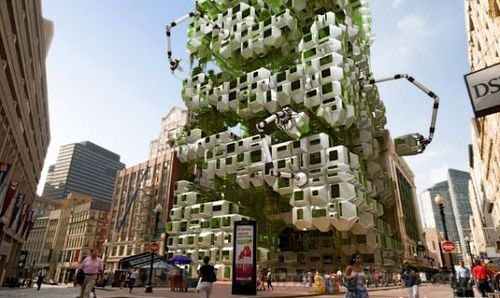
Ecological architecture Network image
A powerful tool for ecological transformation
"Green economy is more suitable for developing countries, transforming traditional economies and eliminating backward production capacity. Concepts like circular economy and ecological architecture were first proposed and practiced by developed countries, where ecological technology plays an important role. It is a powerful tool to achieve sustainable and ecological buildings," said Dong Suocheng.
According to reporters, the concept of ecological architecture was mentioned by Western developed countries in the 1990s. By the end of the 20th century, some developed countries in Western Europe began to set goals for ecological modernization, and China also started to attempt building garden cities and ecological cities.
"Of course, the aesthetics of ecological architecture and its harmony with the surrounding environment are also very important, which places higher demands on architectural design," said Dong Suocheng. "The essence of architectural ecology is to integrate buildings into a larger ecological cycle. Its 'ultra-low carbon' nature considers energy and resource flows from the overall perspective of the building and environment, including consumption during construction, design, and use, incorporating it into the entire ecosystem. This is a development model tending towards a positive cycle."
Lack of standards and models
From the perspective of sustainable building considerations, ecological architecture is the "main path" for architectural development in the 21st century.
"However, many problems still exist in actual urban construction," Dong Suocheng told reporters. "Many cities blindly pursue 'tall and beautiful' buildings without considering the carrying capacity of the surrounding environment or the tolerance of the ecosystem. To make cities full of high-rise buildings, wide roads, and superficial greening, resource burdens increase, leading to frequent cases of water shortages and rising total energy consumption."
"Buildings lacking ecological connotations not only fail to meet basic energy-saving and emission-reduction standards but also lack understanding of regional ecological culture. During construction, the scale and pace should conform to local environmental characteristics. Only on this basis can the constructed building groups become local regional landmarks and members of the local ecosystem," said Dong Suocheng.
Other experts have pointed out that the economic rationality of ecological architecture itself is quite prominent. Due to China's current ecological technology and material technology lagging seriously behind developed countries, the unilateral high demands of ecological architecture discourage building owners. At the same time, developers are unwilling to take risks because of high upfront investment and slow profit recovery.
Dong Suocheng said that ecological architecture is still in its initial stage, and policy demand is strong. It is urgent to establish national standards for ecological architecture and impose certain mandatory constraints on the ecological development of buildings, especially during rapid urbanization. Forming some model ecological building clusters to ensure the quantity of ecological buildings and more preferential measures for major construction project approvals is particularly important.
Environmental building materials add highlights to ecological architecture
If the site selection and design of a building define the soul and lifeblood of ecological architecture, then building materials are its skeleton and skin.
"Ecological architecture must use environmentally friendly organic building materials that are harmless to humans and non-polluting to the environment. If inferior materials that emit formaldehyde, benzene, and other serious carcinogens are used, ecological architecture will only fail," said Dong Suocheng. "In material selection, ecological architecture should use as many reusable wastes as possible, such as fly ash that can be recycled and used as hollow bricks for building frameworks."
According to reporters, besides traditional environmentally friendly building materials, intelligent building materials have appeared on the market. These are composite materials or composites manufactured using bionic principles that can automatically adjust their performance parameters to adapt to environmental changes. Modern bionics can greatly enhance the humidity regulation function of materials, including concrete and cement, which were previously considered non-environmentally friendly. Their environmental performance has greatly improved by applying bionic principles. Besides humidity regulation, intelligent materials can reduce electromagnetic radiation, inhibit bacteria, adsorb toxic gases, and regulate indoor temperature. Additionally, some intelligent materials themselves are recyclable resources, reflecting the sustainable design concept of ecological architecture from another perspective.
However, experts have pointed out that the functions of new environmentally friendly building materials must be integrated with the overall design of ecological architecture to maximize benefits. If advanced materials are used alone but the overall building design is unreasonable, or if the materials used conflict functionally with the building design, then even the best materials are "heroes with no place to use."
